
Reversed Loading Flexural Fatigue (ASTM D7774)
Model No. WTF-RF (Stainless Steel)
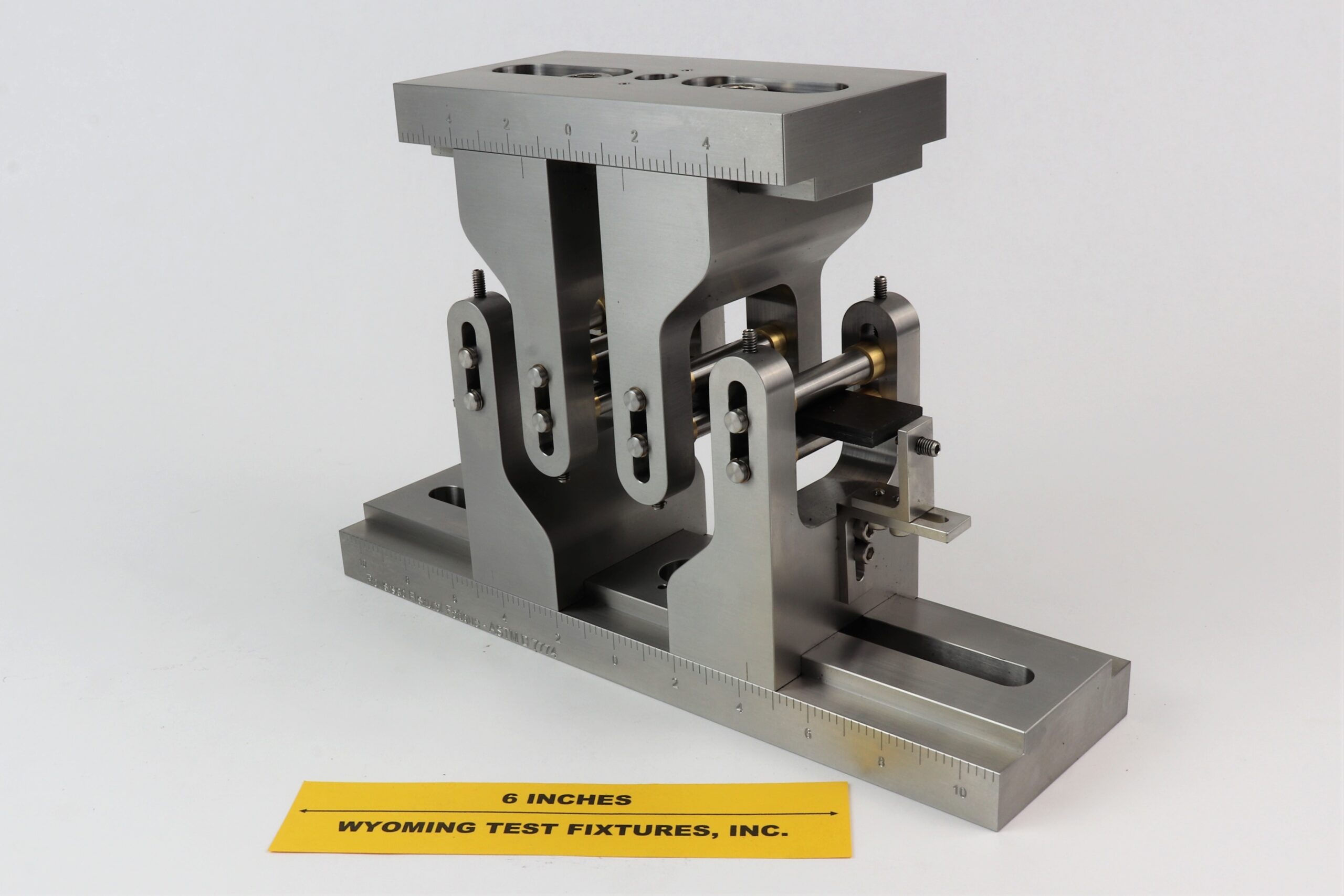
Fig. 1: Reversed Loading Flexural Fatigue with fully adjustable spans, engraved scale markings, 10" maximum support span and 6" maximum loading span.
Fatigue testing is becoming an increasingly more prevalent need in the world of composites. The most common of these methods is the reverse flexural fatigue that was standardized in ASTM D7774. While the method was designed for plastics it quickly found a home in the world of composites and is often used. Before this method was adopted the normal way of doing fatigue testing was using a modified long beam flexure fixture.
This method can be performed in 3-point and 4-point loading, labeled Procedure A and B respectively in the standard. The roller cylinders are separated to make way for the specimen and the specimen is then lightly clamped between them. The fixture is then cyclically loaded until fatigue failure is caused or a specific number of cycles is passed resulting in a run off.
Per the standard the 3-point loading has a support span of 10 inches while the 4-point has a support span of 4-8 inches. Both types have a roller diameter of 10mm. However custom fixtures can be made to accommodate various spans and diameters.
The fixture is attached directly to the machine and doesn't have any alignment rods so use of lock rings on the adapter is needed to ensure the fixture lines up properly. We can supply any adapter at an additional cost if they are needed for this fixture.
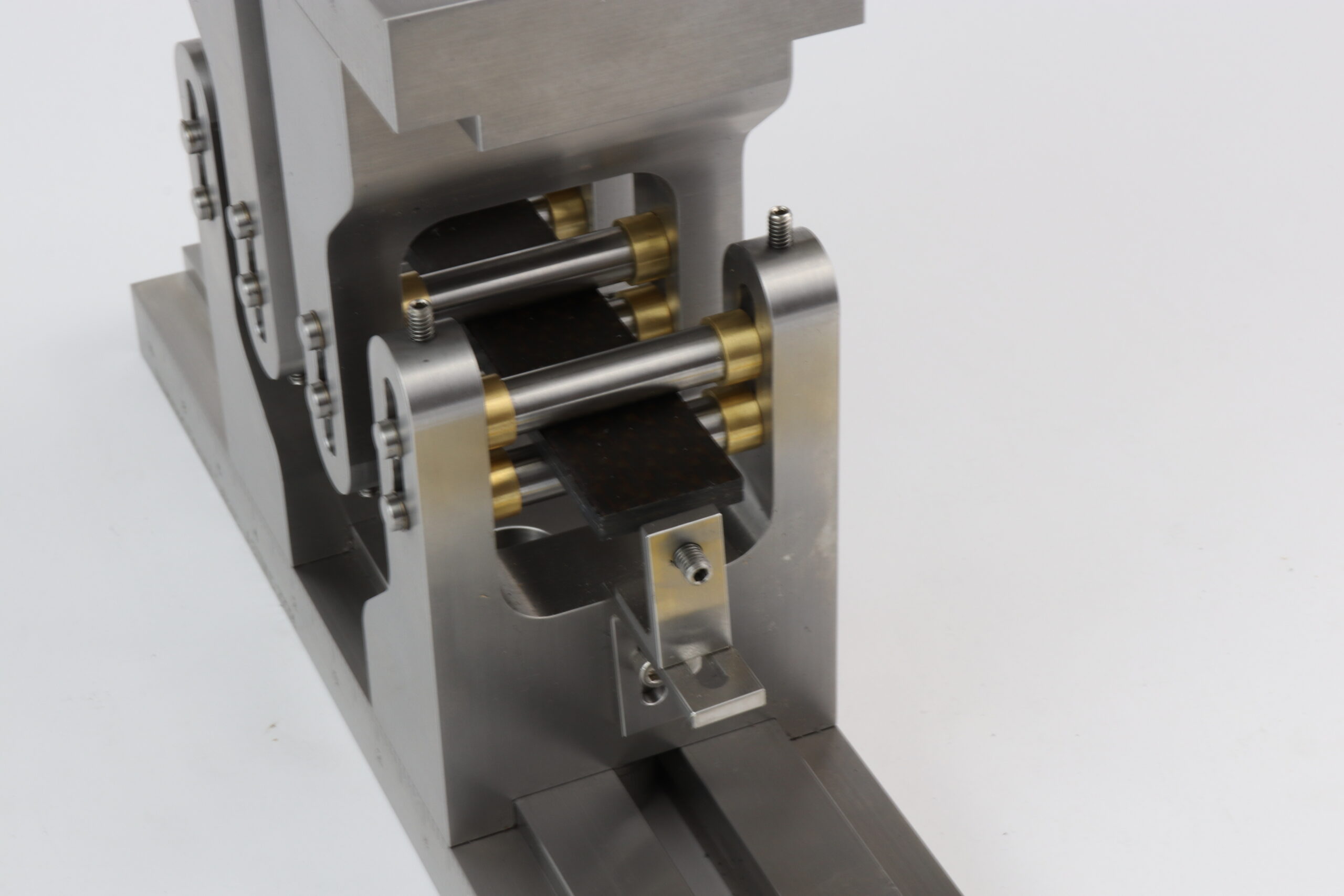
Fig. 2: Close up of the cylinders
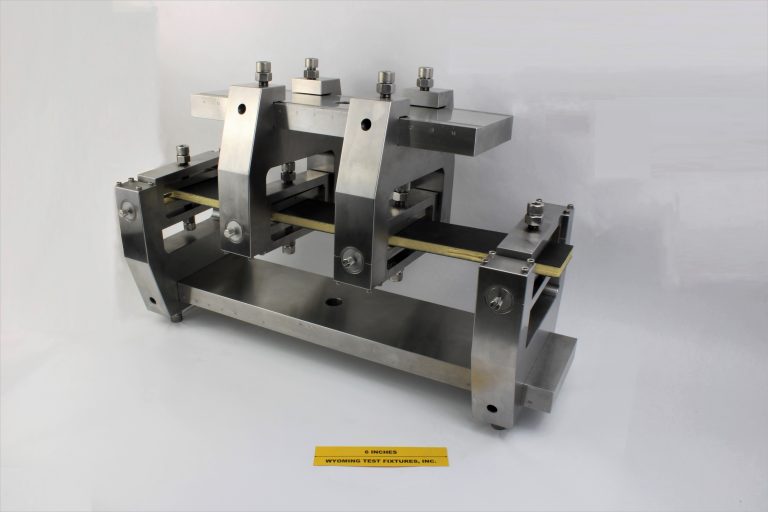
Fig. 3: Custom version of WTF-RF designed for large loads and oversized specimens
追加情報のソース。
1) ASTM Standard D7774-12 (2012), "Standard Test Method for Flexural Fatigue Properties of Plastics," American Society for Testing and Materials, West Conshohocken, Pennsylvania.
2) Adams, D.F., “Reversed loading flexural fatigue”, CompositesWorld, April 2014. Available online at https://www.compositesworld.com/articles/reversed-loading-flexural-fatigue
 Japanese
  English
  Chinese
  German
  French
  Italian
  Russian